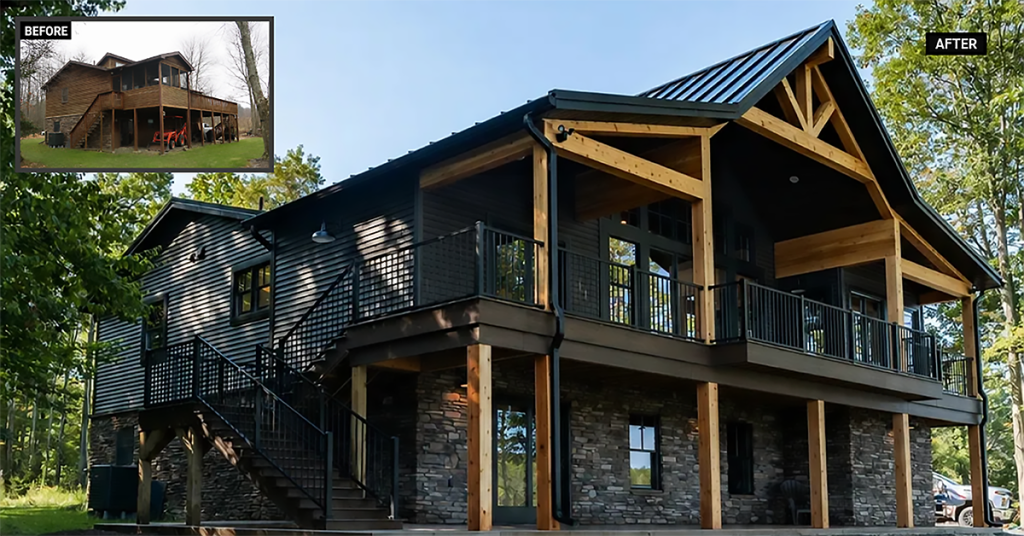
One of the most common questions homeowners bring to us sounds something like this: “If we’re going to spend this much renovating our house, should we just build a new home instead?” It’s a fair question. A major renovation or addition is a significant investment. Once you start pricing new floor plans, adding square footage, mechanical upgrades, kitchens, bathrooms, and exterior work, starting over can look tempting.
The truth is, there isn’t one answer that fits every family. NEPA Builders works with homeowners across Northeastern Pennsylvania on both major renovations and custom new homes, and we’ve seen families choose each path for very different reasons. When weighing home renovation vs. new construction, the decision usually comes down to more than cost. Your equity, neighborhood, school district, financing, timeline, lifestyle, and emotional connection to your home all play a part.
Start With the Financial Reality of Both Options
Before comparing home remodeling with new home construction, it helps to understand one thing about large custom projects. A major renovation or custom home shouldn’t always be viewed as a short-term financial investment.
Spending hundreds of thousands of dollars to create exactly what your family wants doesn’t mean your property’s market value will rise by the same amount. Think of it like buying a new vehicle. What you pay and what someone else will pay for it the next day aren’t always the same.
Because of this, most homeowners fall into one of two groups. Knowing which group you belong to makes every other part of the decision clearer.
The Resale-Focused Homeowner
This homeowner wants a better living space, but resale value stays near the top of the list. They often ask how much an improvement will add to the home’s value, how long they plan to stay, and whether they’re over-improving for the neighborhood. If you hope to recover most of your investment when you sell in a few years, a large custom project may not be the best financial fit. Buying an existing home, working with a production builder, or exploring modular construction could be worth a look.
The Quality-of-Life-Focused Homeowner
Many of our renovation and custom home clients land here. Instead of planning around the next buyer, they ask, “What would make this the best home for our family?” Our families are only this age once. The kids won’t always live at home, and everyone won’t always gather around the kitchen table the way they do today. For these homeowners, spending more than they might recover at resale makes sense. They’re investing in years of better living, something an appraisal can’t measure.
Why Renovating Your Current Home May Make More Sense
Sometimes the house is the problem, but the property isn’t. Home remodeling lets you keep what already works, from the yard to the community you’ve built your life around.
With an existing home, several pieces of the puzzle are already in place. You have the property, a driveway, utility service, a standing structure, and an established address. Depending on the project and municipality, design and permitting can also be more straightforward than starting with vacant land. That head start can shorten the path from planning to finished space. For many families, renovating or adding on is the most practical way to get the home they need without leaving the place they love.
You Love Your Location and School District
You may love your neighbors, commute, community, and closeness to family. Finding another property that checks all of those boxes is hard. For families with children, the school district often matters most. A move could mean new schools, friends, sports teams, and routines. We’ve worked with many families for whom staying in a certain district was non-negotiable. If a suitable home or building lot isn’t available there, renovating becomes the clear choice.
Equity and Financing Can Work in Your Favor
If you bought your home years ago, mortgage payments and appreciation may have built substantial equity. That’s even more likely if you inherited a family property or owned your home before the COVID-era rise in real estate values. An existing home can also make financing easier, since the lender has an established asset and your payment history to work with. Every situation is different, so talk with your lender about your options. NEPA Builders also offers financing.
Your Home Holds Sentimental Value
Not every good decision fits on a spreadsheet. We’ve renovated homes that belonged to parents and grandparents. Years ago, we completed a major renovation of an old family home in Lake Ariel. Parts of the original house were framed with tree limbs. Starting over would have been easy to justify, but the home had belonged to the owner’s grandfather for generations. He wanted to bring it back to life, and that kind of pride is priceless.
You May Be Able to Stay Home During Construction
For some additions and renovations, homeowners can live in part of the house while work is underway. That can remove the need to sell first or find temporary housing. It’s a real tradeoff, though. Living through a major renovation means dust, noise, workers, temporary walls, and limited access to parts of your home. You may even lose your kitchen or a bathroom for a while. For some families, that’s a small price. For others, it’s a deal breaker.
The Challenges of Home Remodeling
Renovating isn’t automatically easier or cheaper. When we build a new house, we know exactly what we’re building. In an older home, nobody knows everything behind the walls until they’re opened. Major renovations can uncover rot, structural problems, outdated electrical, plumbing issues, water damage, poor insulation, foundation concerns, and improper past work. A thorough preconstruction process reduces these risks, but it can’t remove every unknown.
Every existing house also comes with rules. The foundation, structural walls, stairs, rooflines, ceiling heights, and property setbacks all limit what’s possible. At some point, it’s worth asking if you’re renovating this house or building a new one the hard way. If it’s the latter, new construction deserves serious thought.
Why Building a New Custom Home May Make More Sense
Building new gives you control over every part of your home from day one. Housing inventory also plays a role. You might decide your current home isn’t worth renovating, then find very few existing homes on the market that meet your needs. In some areas, finding a good piece of land and building what you want is more realistic than waiting for the perfect house.
New home construction also lets you stay in your current home while the work happens somewhere else. You skip the saws, dust, and dumpsters, then move when the new house is ready. Keep in mind that this may mean carrying your current home and new project financing at the same time.
A Blank Canvas for Custom Home Design
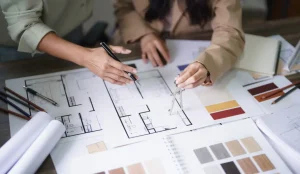
Rather than asking how to make an existing layout work, you get to ask how you actually want to live. Custom home design lets you plan around your priorities from the start. That might include kitchen size, a mudroom with plenty of storage, a home office, or a first-floor primary suite. You can also plan garage size, outdoor living areas, ceiling heights, natural light, bedrooms, entertaining spaces, and features that support aging in place.
New Systems and Quality Materials From the Start
A new home starts with new components throughout. Instead of wondering when you’ll need to replace an aging roof, HVAC system, electrical service, plumbing, windows, or insulation, everything is new. That can mean better energy efficiency, lower maintenance, and fewer worries about aging systems. It also gives you the chance to choose trusted products, such as Owens Corning® roofing, James Hardie® siding, Trex® decking, and ProVia® entry doors.
The Challenges of New Home Construction
Buying vacant land adds costs that don’t exist when you renovate a property you already own. Before construction begins, you may need to budget for the land purchase, closing costs, surveying, engineering, excavation, clearing, grading, a driveway, a well, a septic system, utility connections, and permits. Comparing a renovation to only the price of the new house can be misleading. Compare the entire project.
Financing can also be more complex because the lender is funding something that doesn’t exist yet. Land, construction loans, future appraised value, draw schedules, and conversion to permanent financing all come into play. Work with a lender experienced in construction financing.
When comparing timelines, look at the time from “we’ve decided” to “we’re moving in,” not just construction schedules.
Questions to Ask Before You Decide
Rather than jumping straight to price-per-square-foot numbers, start with these questions:
- Do we love where we live? If the neighborhood, property, and schools feel right, that’s a strong case for renovating.
- How much of our house works for us? If 70% works and 30% needs to change, renovating may be logical. If nearly everything needs to change, consider building new.
- How attached are we to this home? Sentimental value can guide the decision, as long as you recognize it’s part of the equation.
- How important is resale value? If you may move soon, be careful with highly customized upgrades that the market may not support.
- Are we willing to live through construction? For some, it’s an inconvenience. For others, it’s a deal breaker.
- Are we investing for the next buyer or for our family? This may be the most important question of all.
Talk With a Design and Build Team Before You Commit
Once financing, appraisals, and construction costs are on the table, the decision often gets simpler. What do you want the next 10, 20, or 30 years to look like? For one homeowner, the right choice is restoring the house that their grandfather built. For another, it’s buying land and finally designing the home they’ve wanted for 20 years. Neither is automatically better.
View Project Gallery
As custom home builders in Northeast PA and experienced home remodeling contractors, NEPA Builders helps homeowners plan, design, and build major renovations, additions, and custom homes. If you’re asking whether to renovate or build new, that’s a conversation worth having before you commit. Contact our team to schedule your free estimate and ask about financing options. Building a better northeast starts at home.