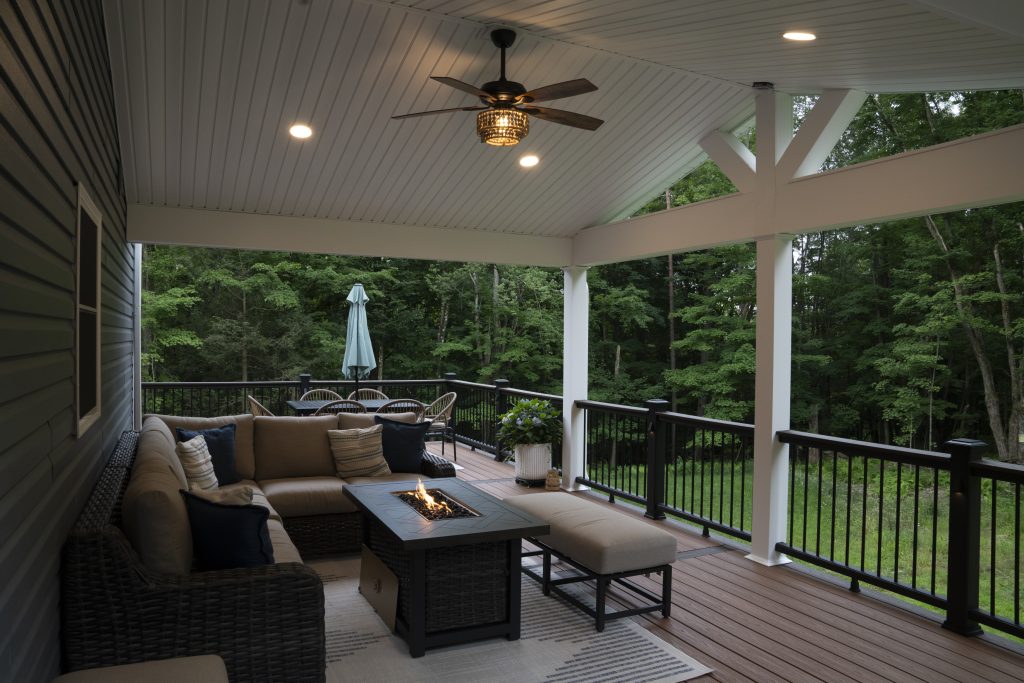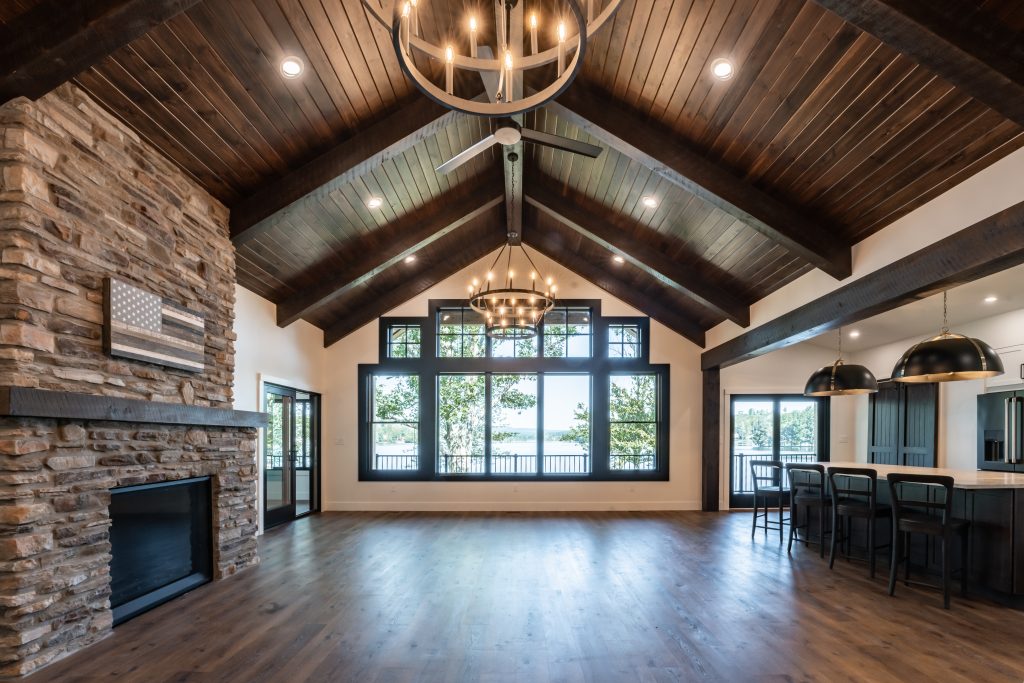
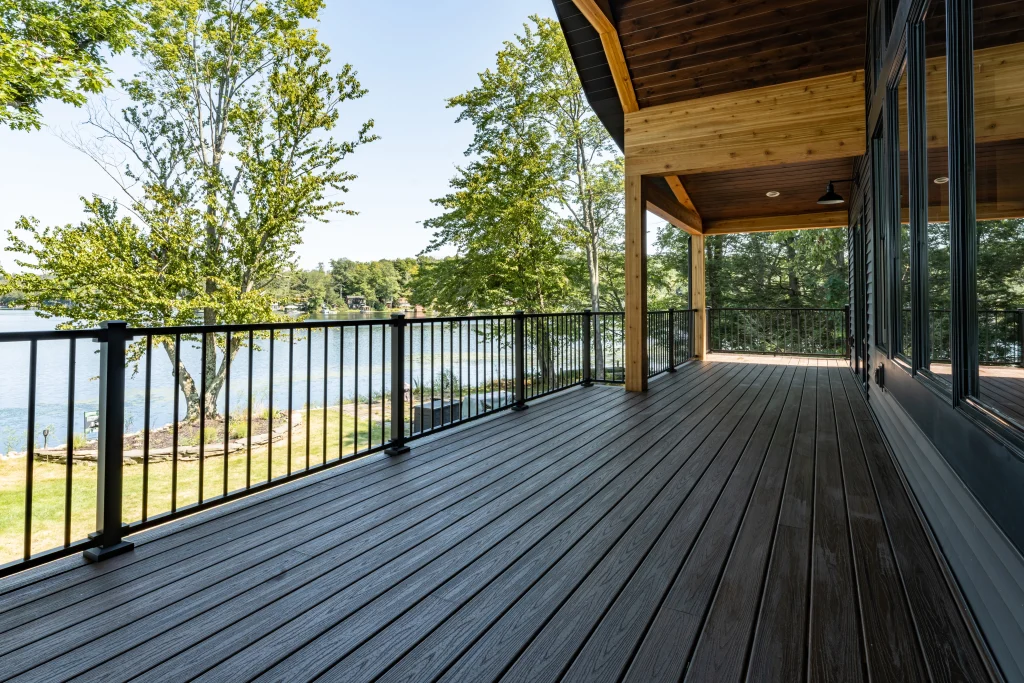
If you’ve been thinking about adding a deck to your home, you’ve probably already come across the name Trex®. At NEPA Builders, we are Trex Pro Gold Status Deck Builders. We install Trex composite decking on a regular basis, and for good reason. It’s one of the most trusted names in the industry, and it gives homeowners a real alternative to the constant upkeep that comes with a wood deck. Whether you’re starting from scratch or replacing an aging structure, understanding what Trex offers across its product lines will help you make the right call for your budget, your lifestyle, and your home. This post breaks down everything you need to know, from how composite holds up over time to which product line fits your situation.
What Makes Trex Different From Traditional Wood Decking?
Wood decking has been around forever, and it’s not without its appeal. But the maintenance demands are real. Staining, sealing, sanding, and dealing with rot or splinters add up in both time and money year after year. Trex composite decking is built from 95% recycled materials, including reclaimed wood fibers and plastic film, which means it won’t rot, warp, or splinter. You also won’t need to paint or seal it. Beyond the maintenance factor, Trex boards are engineered to resist moisture, mold, mildew, and fading, making them a more predictable long-term investment. For homeowners in Northeast PA who deal with cold winters, wet springs, and hot summers, that kind of durability matters.
How Does Trex Composite Decking Hold Up Over Time?
The short answer is very well. Every Trex board features a protective shell that guards against fading, staining, and scratching. The strength of that shell varies depending on which product line you choose, but even the entry-level options are built to last decades. Wood decks typically last anywhere from 10 to 15 years before needing major attention. Trex decking is backed by warranties ranging from 25 to 50 years, depending on the line, which speaks directly to how the product is designed to perform. On a practical level, that means less time maintaining your deck and more time actually using it. The trade-off is a higher upfront material cost compared to pressure-treated wood, but the long-term savings in maintenance typically close that gap over time.
Breaking Down the Trex Product Lines
Trex offers three main composite decking lines: Enhance, Select, and Transcend. Each one is designed for a different combination of budget and performance needs. Here’s what sets them apart.
Trex Enhance
Trex Enhance is the entry-level option in the Trex lineup. It features a scalloped board profile on the underside, which reduces material weight and makes handling easier on the job site. Enhance boards come in two collections: Basics and Naturals. Basics offers clean, solid tones, while Naturals leans into a more textured, wood-like appearance. The protective shell on Enhance boards covers three sides of the board, which still provides solid protection against moisture and mold, though it is thinner than the shell on Select or Transcend boards. It’s a practical choice for low-to-moderate traffic areas where budget is the primary concern.
Trex Select
Trex Select is the mid-range option, and it offers a noticeable step up in performance without jumping to a premium price. Select boards are covered by a full protective shell on all sides, which improves scratch resistance and moisture protection compared to Enhance. The boards are slightly thinner at 7/8 of an inch, which also makes them lighter to work with. Trex Select comes in two classic earth-tone color options that work well with a wide range of home exteriors. The surface has a textured, ring-pattern appearance that resembles painted or stained wood. For homeowners who want solid durability and a clean look without the cost of the premium line, Select tends to hit the right mark.
Trex Transcend
Trex Transcend is the flagship product in the Trex lineup and the most widely recognized composite decking on the market. The boards are one inch thick, feature a full protective shell, and offer the deepest scratch and fade resistance of the three lines. Transcend is available in six multi-tonal colors that closely mimic the look and feel of natural hardwood. The grain pattern is more detailed and realistic than what you’ll find in either Enhance or Select. For high-traffic decks, entertainment spaces, or any project where long-term aesthetics are a priority, Transcend is the go-to choice. It’s also the line that unlocks the widest range of Trex railing options for a more complete, coordinated build.
Trex Decking Comparison Chart
|
Feature |
Trex Enhance |
Trex Select |
Trex Transcend |
|
Example Deck 16’x12’ (Material Only) |
$4500-$5500 |
$5800-$7000 |
$7500-$9000 |
|
Board Profile |
Scalloped (lighter weight) |
Solid |
Solid (thicker) |
|
Protective Shell |
3 sides |
Full Coverage |
Full Coverage (strongest) |
|
Durability |
Good |
Better |
Best |
|
Color Options |
Basics & Naturals (light, subtle tones) |
2 Earth tones |
6 Rich, multi-tonal colors |
|
Best For |
Budget-friendly, low-traffic decks |
Balanced performance & cost |
High-traffic, premium outdoor spaces |
Trex Decking Colors: What’s Available Across Each Line?
Color selection is one of the more practical parts of the decision, and it varies quite a bit between lines.
Trex Enhance Basics comes in solid, neutral tones like Beach Dune and Clam Shell. Enhance Naturals adds options with more wood-like variation, including Foggy Wharf and Toasted Sand. Both collections lean toward lighter, understated palettes.
Trex Select keeps things simple with a focused range of classic, neutral colors. It’s a great option for homeowners who want a traditional deck appearance without overcomplicating the design process.
Trex Transcend offers the broadest range with six nature-inspired shades: Havana Gold, Island Mist, Lava Rock, Spiced Rum, Tiki Torch, and Rope Swing. These colors are richer and more saturated, with multi-tonal variation that makes them look closer to real hardwood. If a specific aesthetic is a priority for your project, Transcend gives you the most to work with.
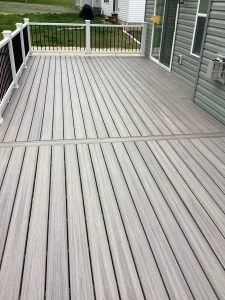
Trex Decking Cost: What Affects the Price?
Material cost for Trex boards typically ranges from around $5 to $12 per square foot, depending on the line, though final project pricing will also factor in labor, site conditions, the framing system, and any railing or stair work involved. Here’s a general sense of where each line falls:
- Trex Enhance runs roughly $4500-$5500 for materials for a 16’x12’ deck
- Trex Select runs roughly $5800-$7000 for materials for a 16’x12’ deck
- Trex Transcend runs roughly $7500-$9000 for materials for a 16’x12’ deck
Deck size, design complexity, and local labor rates all affect the final number, so these figures are a starting point rather than a firm quote. The more useful way to think about pricing is the total cost of ownership. A Trex deck requires no staining, sealing, or sanding over its life, which removes a recurring expense that wood decks carry every few years. Over a 10- to 20-year period, that savings is real. The best way to get a clear picture of the cost for your specific project is to request a free estimate from your deck contractor.
Trex Deck Railing: Options for Every Line
Trex makes matching railing systems for each of its decking lines, which makes it straightforward to build a cohesive outdoor space from the boards up.
Trex Enhance Railing is an accessible, kit-based composite system that comes with four color options and a choice of square composite or round aluminum balusters. It’s a solid match for Enhance decking projects where simplicity and affordability are the goal.
Trex Select Railing offers composite rails in Charcoal Black and Classic White. Clean lines and a timeless profile make it a natural fit for Select decking projects. The kit-based format simplifies ordering and installation.
Trex Transcend Railing is the most versatile of the group. It can be configured with composite or aluminum balusters in a wide range of colors, including Classic White, Charcoal Black, Tree House, Vintage Lantern, and more. Infill options extend to glass and mesh for homeowners who want an open sight line. Curved rail configurations are also available for decks with unique layouts. Of all the Trex railing options, Transcend offers the most flexibility for customization.
For those who want a more modern, minimalist look, Trex also offers the Signature aluminum railing system, which pairs well with any decking line and comes in Charcoal Black, Bronze, and White.
Which Trex Line Is Right for You?
The right product comes down to three things: budget, how much traffic the deck will see, and how important aesthetics are to you.
If you’re working with a tighter budget or building a smaller deck that won’t see heavy use, Trex Enhance gets the job done with solid composite performance at the lowest entry price. If you want something more durable without paying premium prices, Trex Select is a well-rounded choice that performs reliably over time. If you’re building a main outdoor living space, a wrap-around porch, or anything where the look and longevity of the deck really matter, Trex Transcend is worth the investment.
No matter which line you choose, Trex composite outperforms wood in durability and maintenance demands. The decision within the Trex lineup is really about how much you want to invest upfront versus what level of performance and appearance you’re targeting.
Ready to start planning your deck project? Contact NEPA Builders for a free estimate. Our team works with all three Trex decking lines and can help you find the right fit for your home and your budget. Get in touch today.